Cart
0
Free delivery to Sweden in 2–5 business days
Fast and reliable shipping with tracking included.


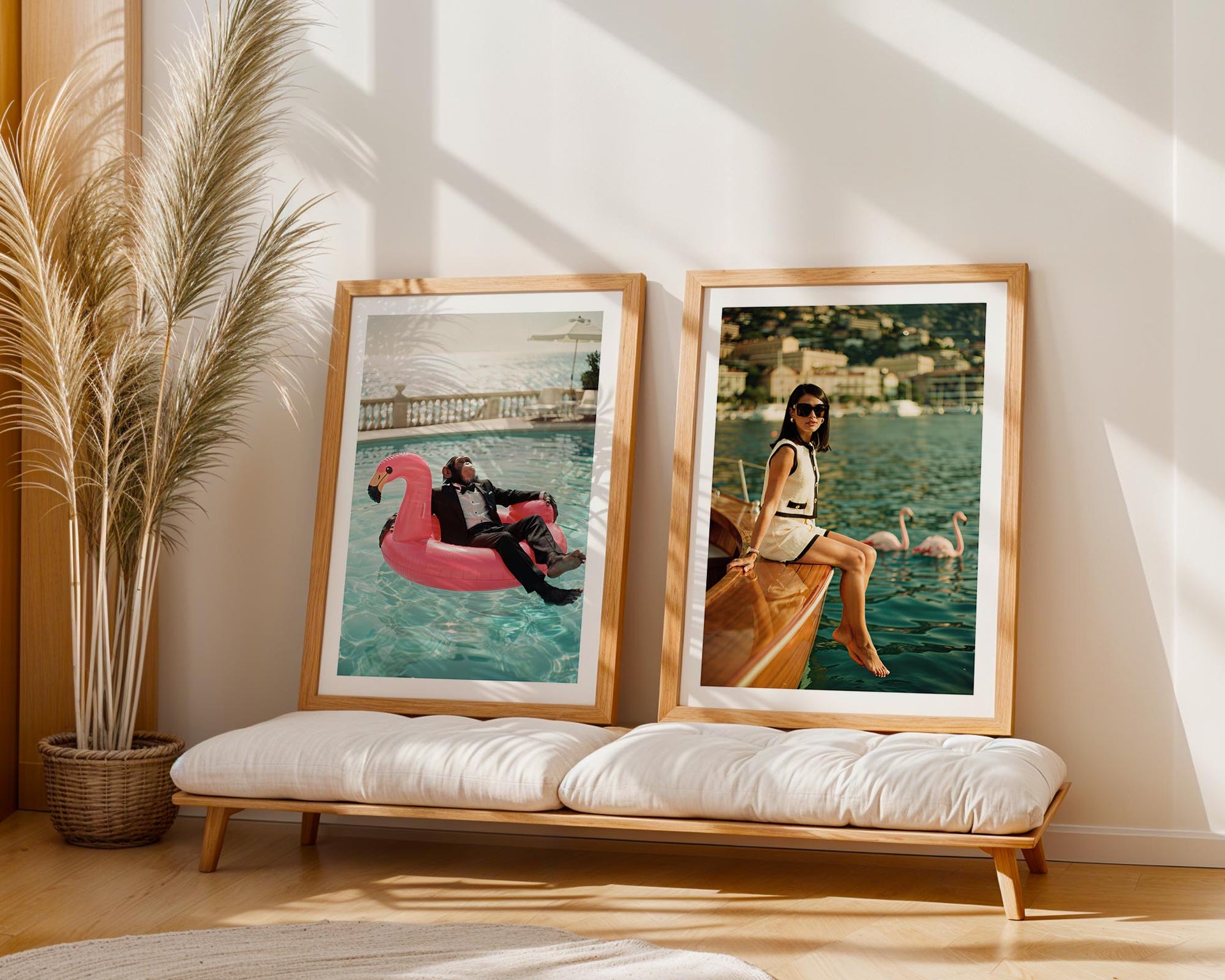
Quiet luxury is not a new idea. It is the oldest idea in good interior design — that a room should communicate quality without effort, confidence without display, and taste without explanation.
What is new is the name. The term arrived in fashion first, describing a wardrobe built around precisely cut cashmere and understated leather rather than logos and statement pieces. Interior design followed quickly, for the same reasons: a growing exhaustion with maximalism, with fast aesthetics, with rooms that looked expensive but felt hollow.
Quiet luxury in interior design is, at its core, a refusal. A refusal to perform wealth. A refusal to follow trends. A refusal to fill space for the sake of filling it.
The quiet luxury interior is immediately recognisable and almost impossible to date. It could be a photograph from 1978 or a room completed last month. The palette is warm and restrained — cream, bone, warm grey, aged linen, deep charcoal. The materials are natural — stone, plaster, solid wood, linen, wool. Nothing synthetic. Nothing that announces itself.
The furniture is well-made and understated. It does not have a logo. It does not need one. The proportions are right, the fabric is correct, and it will still be in the room in thirty years.
The walls are considered. Not bare — bare walls in a quiet luxury interior read as unfinished rather than restrained — but carefully edited. Every piece of art has earned its place. Nothing is there to fill a gap.
And everything, taken together, suggests a person rather than a brief. The room has a point of view. It knows what it is.

Quiet luxury is frequently confused with minimalism, and the two share certain qualities — restraint, editing, an aversion to clutter. But they are not the same aesthetic, and the distinction matters.
Minimalism removes. It is an exercise in reduction — the fewer objects, the purer the space. A minimalist room at its most resolved contains almost nothing. The emptiness is the point.
Quiet luxury curates. It is not about having less. It is about having exactly the right things. A quiet luxury room may contain books, art, objects collected over time — but each one is there for a reason. The room is full in the way that a well-edited wardrobe is full: nothing superfluous, nothing missing.
The other distinction is warmth. Minimalism tends toward the cool and cerebral — white walls, concrete floors, sharp geometry. Quiet luxury tends toward the warm and inhabited — aged plaster, natural fibre, rooms that look as though someone actually lives in them.
Art is where quiet luxury interiors either succeed completely or fail entirely.
Generic art — the kind chosen to fill a wall or match a palette — immediately undermines the rest of the room. It signals that the decisions were aesthetic rather than intentional. That the room was assembled rather than lived into.
The right art does the opposite. It gives the room a cultural register — a sense of where the person who lives there has been, what they find compelling, what world they identify with. It communicates specificity, which is the quality that quiet luxury rooms require above all others.
For quiet luxury interiors, the strongest art tends to share certain qualities: a single clear subject with strong compositional presence, a tonal palette that sits within the room's warmth without competing for attention, and a subject matter that references something rather than merely depicting it.
Belora's old money wall art collection is built precisely around this register. The Alpine collection — Gstaad, St. Moritz, the Swiss winter world — carries the cultural weight of European old money without sentimentality. The Riviera collection brings the Côte d'Azur into a room: Monaco, Nice, Cannes, the unhurried glamour of the Mediterranean coast. The black and white collection offers the most versatile entry point — monochrome prints that work in any quiet luxury interior regardless of palette.
Every print is produced on archival giclée paper with fade-resistant inks — the same standard used in museum editions. The production quality is part of the point. In a quiet luxury room, the difference between a well-made print and a cheap one is visible. It is felt before it is articulated.

Quiet luxury does not require a renovation or a new budget. It requires a different set of questions.
Does this object earn its place? Every piece of furniture, every decorative object, every piece of art should be there for a reason. Not because it fills a space, not because it was on sale, but because it is genuinely right for the room.
Will this still be correct in ten years? Quiet luxury has no relationship with trend cycles. If the answer depends on what is currently fashionable, the object does not belong in the room.
Does the material age well? Natural materials develop character over time — linen softens, stone acquires patina, solid wood deepens. Synthetic materials do not. The choice between them is not about cost. It is about what the room will feel like in a decade.
Is there enough negative space? A quiet luxury room breathes. Surfaces are not filled. Walls are not covered. The space between objects is as deliberate as the objects themselves.
In a quiet luxury interior, the walls carry the most communicative weight. Furniture can be understated to the point of invisibility. Art cannot. It is always present, always saying something.
One large-format print — 70×100 cm or 100×140 cm, framed simply in black or natural wood — changes the entire register of a room. It establishes that the space has a point of view. Everything else in the room orients around it.
For rooms where a single anchor print is not enough, a gallery arrangement of three to five pieces — varying sizes, unified by subject matter or tonal palette — creates the depth that quiet luxury interiors require. Not a maximalist wall. A considered one. The kind that looks assembled over time rather than installed on a Saturday afternoon.
Browse the full Belora & Co collection — or start with the prints most suited to a quiet luxury interior: old money wall art, black and white prints, Riviera, and Alpine.
The quiet luxury interior, at its best, is a room that has nothing to prove. It does not perform. It does not explain. It does not try to impress.
It simply is — warm, considered, specific, and entirely itself.
That is the hardest thing to achieve in interior design. And the most lasting.


