Cart
0
Free delivery to Sweden in 2–5 business days
Fast and reliable shipping with tracking included.


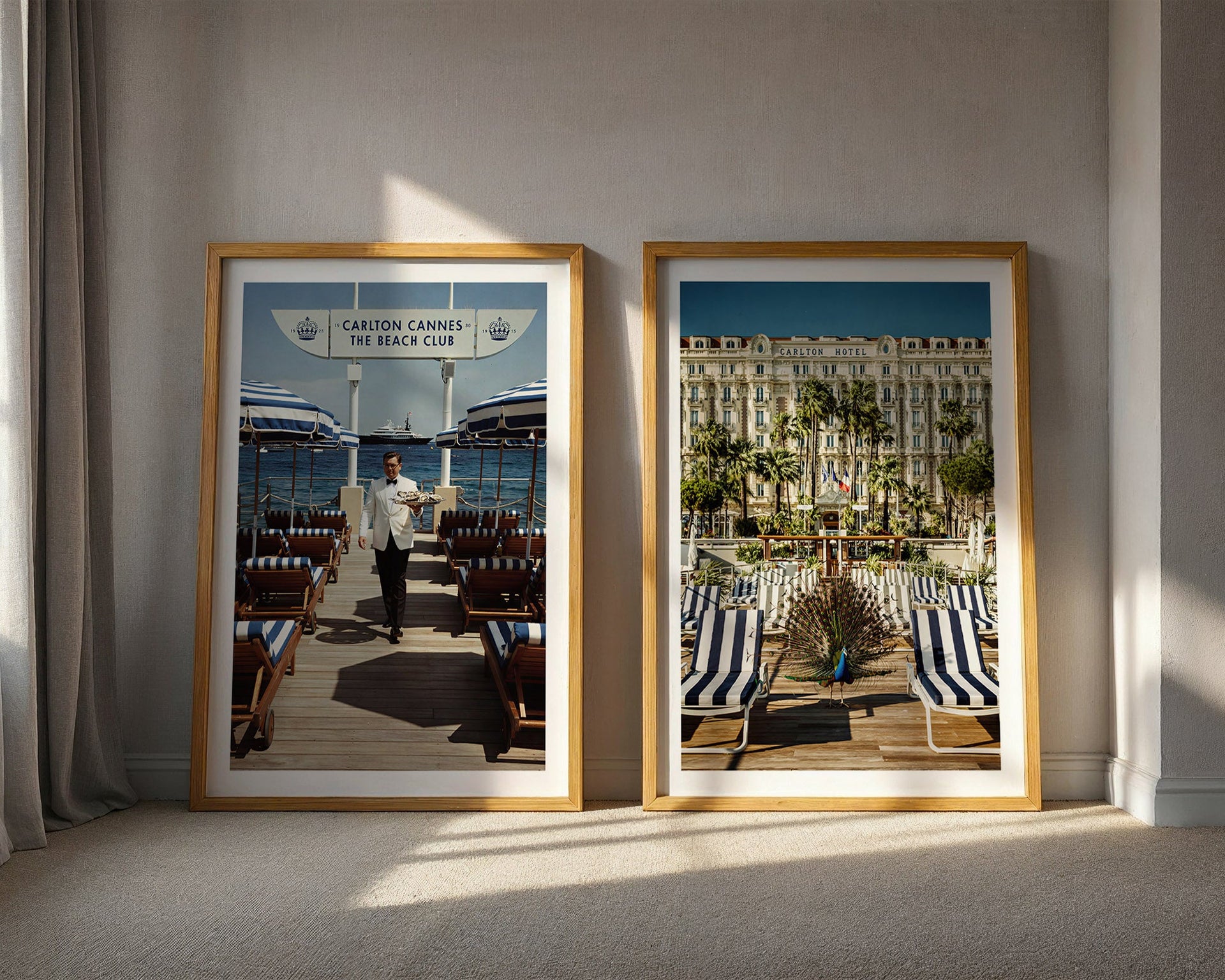
There is a particular kind of room that does not need to explain itself. The proportions are right, the palette sits quietly, and somewhere on the wall there is an image — not a decoration, but a presence. The room has a point of view. It holds it without effort.
That is the aspiration behind old money wall art. And it is also where most people go wrong.
The old money aesthetic has moved firmly into the mainstream, from interiors accounts on Pinterest to spreads in design magazines. With it has come a rush of "old money art" that is, in practice, nothing of the sort: sepia-toned stock photography, repackaged Champagne-and-yacht imagery, lifestyle prints formatted to IKEA sizing. The surface signifiers are there. The feeling is not.
Getting it right requires understanding what the aesthetic is actually built on — and what it is not.

Old money, as a visual language, is not about wealth displayed. It is about wealth assumed. The distinction matters enormously when choosing art.
In the rooms that define the aesthetic — country houses, Palm Beach estates, Côte d'Azur villas captured in mid-century photography — art was not selected for effect. It was accumulated: inherited pieces, works acquired through travel, images that reflected a life rather than a mood board. The result was interiors that felt particular rather than curated, and personal rather than aspirational.
What that means for art selection is counterintuitive: the piece should not look chosen. It should look as though it has always been there, and as though the room would be slightly wrong without it.
This rules out most of what currently sells under the "old money" label. Prints that feature a caption, a quote, or a brand name. Compositions that feel arranged for the camera. Anything that reads as an aesthetic reference rather than a genuine image.
The right piece has a subject that exists for its own sake. A man in a dinner jacket at a poolside table, reading the paper. A woman walking a lion on the Promenade des Anglais, her pace unhurried, her expression uninviting of comment. These are not scenarios designed to signal wealth — they are moments that happen to take place within it.
Old money wall art — the kind that actually works — tends to follow certain visual principles regardless of subject.
Figures are composed, not performing. Protagonists look into the lens or across a distance; they do not pose. There is no energy directed toward the viewer, no invitation to admire them. Total composure is non-negotiable. The moment a subject appears to be aware they are being photographed, the image loses the quality that makes it feel authentic rather than constructed.
Colour is period-correct or absent entirely. The warmth of Kodachrome film — slightly elevated saturation, sunlit rather than studio-lit, a specific quality of light that reads as 1970s without announcing it — gives colour pieces their sense of temporal distance. Alternatively: high-contrast black and white, silver gelatin in tone, which removes the question of era entirely and places the image outside of time altogether. Black and white prints work particularly well in rooms with strong architectural detail, where the absence of colour lets composition do the work.
Scale is not optional. A 30×40 cm print in a standard frame, centred on a large wall, reads immediately as a placeholder rather than a choice. Old money interiors were not modest about scale — large rooms had large work. If the wall can hold a 70×100 cm print, that is the size to consider. The confidence of scale is part of the message.
One piece, placed well, outperforms five pieces grouped. The gallery wall — particularly the eclectic kind, mixing frames and sizes and genres — is a different aesthetic entirely. Old money interiors are not gallery walls. They are rooms where each piece has been given enough space to breathe, enough wall to anchor, enough silence around it to be noticed on its own terms.

Beyond the obvious problem of selecting generic imagery, there are two styling mistakes that give old money wall art away as an attempt rather than a conviction.
The first is scale anxiety. The hesitation to commit to a large format produces prints that sit uncertainly on walls, neither anchoring the room nor deferring to it. A 50×70 cm print in the right room reads as deliberate. The same image at A4 reads as provisional.
The second is over-framing. Heavy ornate frames are not the old money idiom — that is a different aesthetic entirely, one closer to English country house than Riviera villa. The frames in mid-century leisure photography were plain, if the work was framed at all. Solid wood, simple profile, natural finish. The frame should not be more interesting than what is inside it.
The subjects that work best for old money wall art share a quality that is difficult to name directly but easy to recognise: they imply a life rather than a moment.
An alpine scene populated by the right figure. A poolside composition where something is slightly, quietly wrong. A Riviera street where a woman is walking somewhere, unhurried, utterly uninterested in being looked at. These images work because they suggest a context wider than the frame — a life being lived, rather than an image being made.
Subject categories that consistently hold up: alpine leisure, Mediterranean coastlines, classic cars as supporting character rather than subject, formal occasions treated with irreverence, figures in extraordinary settings treating the extraordinary as unremarkable.
What does not hold up over time: images that exist purely to signal — prints of champagne glasses, money stacks styled as art, anything with a logo or a label visible. These are props, not subjects. The room will tire of them.
If the aim is a single piece for a living room or study — the room's one strong visual statement — the approach is this: choose a subject that has a story you would be willing to tell, in a format large enough to hold the wall without apology, in a palette that does not compete with what is already in the room.
For most neutral or warm interiors, a colour print in the Kodachrome register adds warmth and period without effort. For rooms with strong contrast — dark walls, architectural detail, bold furniture — a black and white print in a larger format tends to command attention more effectively.
The Belora old money wall art collection is built around these principles: figures with composure, settings with context, subjects that do not explain themselves. Each piece is printed on museum-quality matte paper with fade-resistant inks, produced to order.
For a wider look at how art functions in rooms that prioritise restraint over decoration, the approach to quiet luxury interiors covers the underlying logic in more detail.
The right image does not announce itself. It simply makes the room feel like it could not have been otherwise.


