Free delivery to Sweden in 2–5 business daysFast and reliable shipping with tracking included.
Wand vervollständigen
Wir haben Ihnen eine E-Mail mit einem Link zum Aktualisieren des Passworts geschickt.
Passwort zurücksetzen
Wir werden Ihnen eine E-Mail zum Zurücksetzen des Passworts schicken.
August-Angebot
—
Trends im Bereich Inneneinrichtung 2026
Sebastian Plengier
0 Kommentare
Kunst wird zur Grundlage der Innenarchitektur
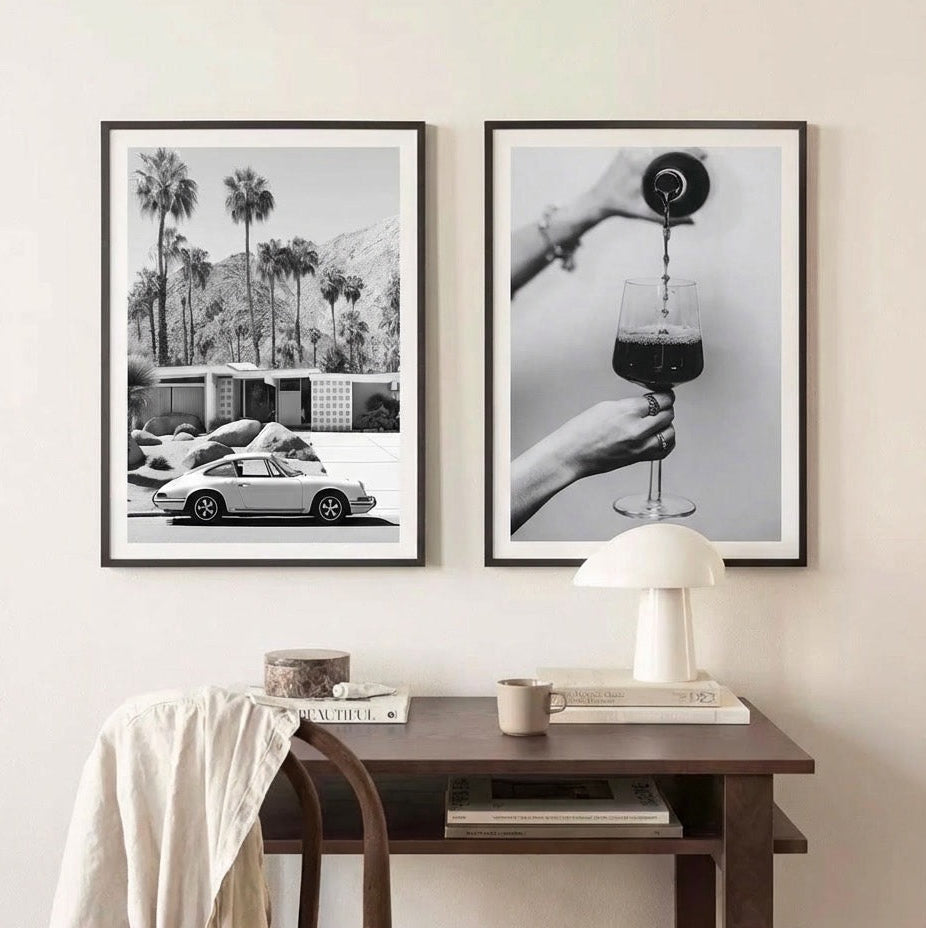
Im Jahr 2026 entwickelt sich die Innenarchitektur hin zu einem bewussteren und ausdrucksstärkeren Ansatz. Anstatt mit Möbeln oder Farbpaletten zu beginnen, fangen immer mehr Hausbesitzer und Designer mit Kunst an. Wandkunst ist nicht länger ein nachträglicher Gedanke oder eine dekorative Ergänzung – sie definiert die Stimmung, den Maßstab und die Identität eines Raumes. Vintage-Poster, Drucke und Fotografien werden früh im Designprozess ausgewählt und beeinflussen alles, von der Beleuchtung bis zur Materialauswahl.
Weniger Stücke, größere Wirkung
Einer der stärksten Trends für 2026 ist die Hinwendung zu weniger, aber größeren Kunstwerken. Anstatt Wände mit vielen kleinen Rahmen zu füllen, bevorzugt man in Innenräumen jetzt übergroße Poster oder ein einzelnes Statement-Kunstwerk. Großformatige Kunst schafft Ruhe, visuelle Klarheit und ein Gefühl von Selbstvertrauen im Raum. Dieser Ansatz passt perfekt zu modernen Luxusinterieurs, in denen Zurückhaltung und Proportionen mehr zählen als Überfluss.
Nostalgie und zeitloser Ausdruck
Vintage-Ästhetik und nostalgische Bezüge gewinnen weiterhin an Bedeutung. Kunst, inspiriert von den 1980er und 1990er Jahren – Reiseszenen, Stadtleben, Architektur und Lifestyle-Fotografie – bringt Wärme und Vertrautheit in zeitgenössische Wohnungen. In einer Ära, die von digitalen Trends und schnellem Konsum geprägt ist, bieten zeitlose Bilder emotionale Tiefe und Langlebigkeit. Das Ziel ist nicht, die Vergangenheit nachzubilden, sondern ein Gefühl einzufangen, das Bestand hat.
Wie Wandkunst im Jahr 2026 verwendet wird
Dies sind einige der wichtigsten Wege, wie Wandkunst im Jahr 2026 Innenräume prägt:
Ein großes Kunstwerk als Mittelpunkt des Raumes
Einheitliche Rahmung in Schwarz, Naturholz oder dezenten Metalloberflächen
Kunst, die Lebensstil, Reisen und persönliche Werte widerspiegelt
Priorität für hochwertige Drucke über Quantität
Kunstwerke, die so positioniert sind, dass sie mit natürlichem Licht und der Architektur interagieren
Kunst als Investition in die Atmosphäre
Im Jahr 2026 wird Kunst als Investition in die Atmosphäre und nicht als Dekoration betrachtet. Das richtige Wandbild beeinflusst, wie sich ein Raum anfühlt und wie er täglich erlebt wird. Durchdacht ausgewählte Poster und Drucke können Ruhe schaffen, den Fokus inspirieren oder subtile Energie hinzufügen – je nach Zweck des Raumes. Dieser emotionale Einfluss ist der Grund, warum Wandkunst eine so zentrale Rolle in modernen Innenräumen spielt.
Fazit
Die Trends im Interior Design für 2026 weisen eindeutig auf reifere, kunstgetriebene Räume hin. Wände sind nicht länger leere Hintergründe, sondern aktive Elemente des Designs. Mit größeren Formaten, zeitloser Ästhetik und einem Fokus auf Qualität wird Wandkunst zur Grundlage eines gut gestalteten Zuhauses. Im kommenden Jahr beginnen großartige Interieurs nicht mit Möbeln – sondern mit Kunst.
Ordered this as a gift. The print quality is very good, colors are rich without looking oversaturated, and the paper has this subtle texture. Bought with a frame and the frame feels solid